Critical Zimbra Flaw Could Let Crafted Emails Run Malicious Code in User Sessions
Zimbra is urging customers to apply updates to address a critical security vulnerability impacting the Classic Web Client that could result in arbitrary code execution. The vulnerability has been desc...
WhatIsFuture AI Editor
Contributor
In the landscape of enterprise collaboration, email remains both the corporate lifeblood and the primary vector for sophisticated cyberattacks. This reality was underscored recently as Zimbra, a global leader in email and collaboration software, issued an urgent advisory to its users.
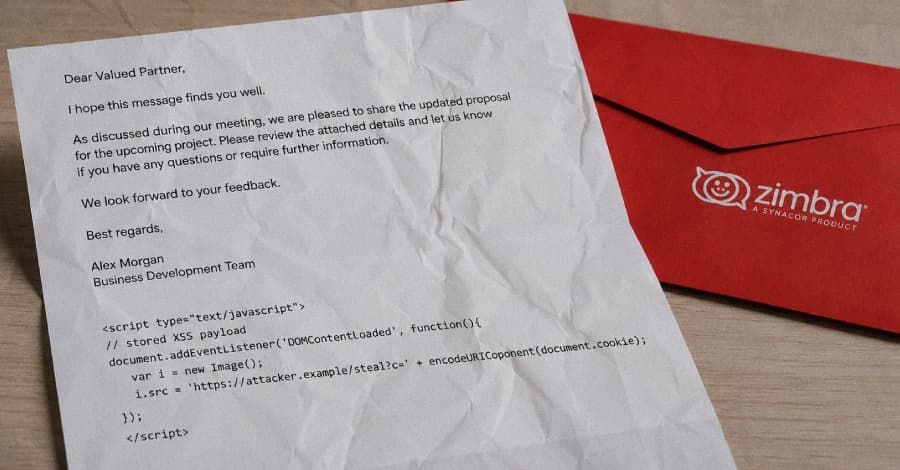
A newly discovered, critical security vulnerability within the platform’s Classic Web Client has put organizations on high alert. If exploited, this flaw allows threat actors to execute arbitrary code silently within an active user session—all initiated by nothing more than a carefully crafted email.
Here is an analysis of the vulnerability, its potential impact on enterprise security, and the immediate steps required to secure your network.
---
The Threat Vector: Inside the Classic Web Client Flaw
At its core, the vulnerability targets Zimbra’s Classic Web Client. This legacy interface, while highly functional and widely used by legacy enterprises, contains a critical sanitization loophole.
``` [Attacker] ---> Sends Crafted Email ---> [Zimbra Server] ---> [Classic Web Client] ---> Arbitrary Code Executes in User Session ```
By sending an email containing malicious, hidden payloads, attackers can bypass security protocols. When an unsuspecting user opens or processes the email within the Classic Web Client, the application triggers the malicious script.
Because the script executes within the context of the user’s active session, the attacker inherits the victim's permissions. This mechanism—known as Arbitrary Code Execution (ACE)—bypasses traditional perimeter defenses entirely.
---
Why This Zimbra Vulnerability is Highly Dangerous
Zimbra is used by over 200,000 businesses, government agencies, and financial institutions worldwide. This makes it a high-value target for both opportunistic cybercriminals and state-sponsored Advanced Persistent Threat (APT) groups.
The implications of an attacker gaining execution rights within a user's session are severe:
- Session Hijacking & Data Exfiltration: Attackers can read sensitive, confidential communications, download proprietary attachments, and export entire contact databases.
- Lateral Movement: Armed with a compromised user session, attackers can pivot to target internal networks, escalate privileges, and compromise the broader active directory.
- Malware Deployment: The vulnerability can act as a gateway to drop ransomware or persistent backdoors into the enterprise ecosystem.
---
Action Plan: Mitigating the Risk
Zimbra has acted swiftly, urging all administrators to apply the latest security updates immediately. To protect your digital infrastructure, security teams should implement the following protocol:
1. Apply Urgent Patches
Deploy Zimbra’s official hotfixes and updates across all mail servers. Prioritize public-facing servers that are most vulnerable to external scanning.2. Transition to the Modern Web Client
Where feasible, transition users from the Classic Web Client to the Modern Web Client, which features more robust security architectures and is not affected by this specific vulnerability class.3. Implement Strict Email Inspection
Ensure your Secure Email Gateway (SEG) is configured to inspect incoming HTML emails and script-heavy attachments to block crafted payloads before they reach user inboxes.---
The Future of Enterprise Email Security
This latest incident highlights a growing trend: legacy web interfaces are becoming the soft underbelly of enterprise software. As organizations modernize their tech stacks, auditing and phasing out legacy dependencies must become a priority.
For IT decision-makers, keeping software patched is no longer just a maintenance routine; it is a vital shield in an era of relentless cyber warfare. If your organization relies on Zimbra, the time to patch is now—before a malicious email breaches your gates.
Supercharge Your Workflow with Claude AI
The AI assistant used by 100K+ professionals. Write, code, analyse — all in one place.